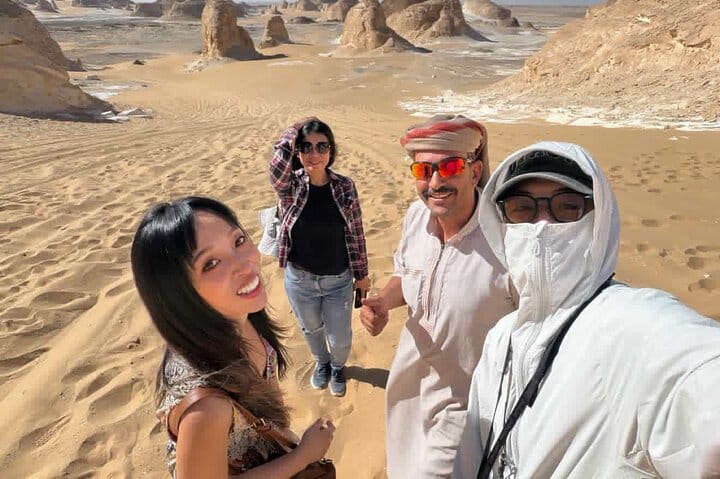
white desert
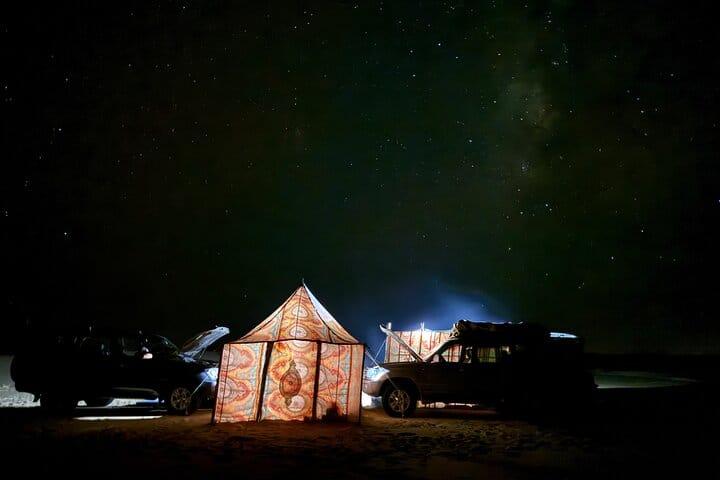
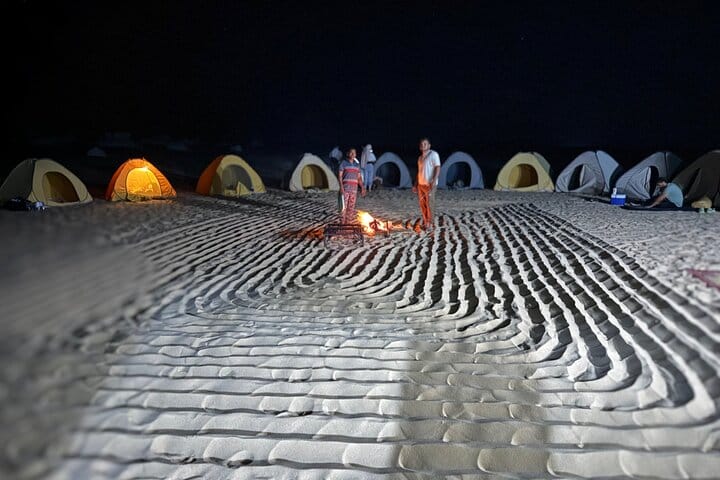
Moving after breakfast to the black desert – Bedouin village [El haez ] hot spring –crystal mountain having lunch in crystal mountain –then going to El Agabat -flower stone – sand dunes – new white desert –make a camp to spend the night .
Here are more detailed parameters that make the White Desert an exceptional and unparalleled destination:
1. Stunning Rock Formations:
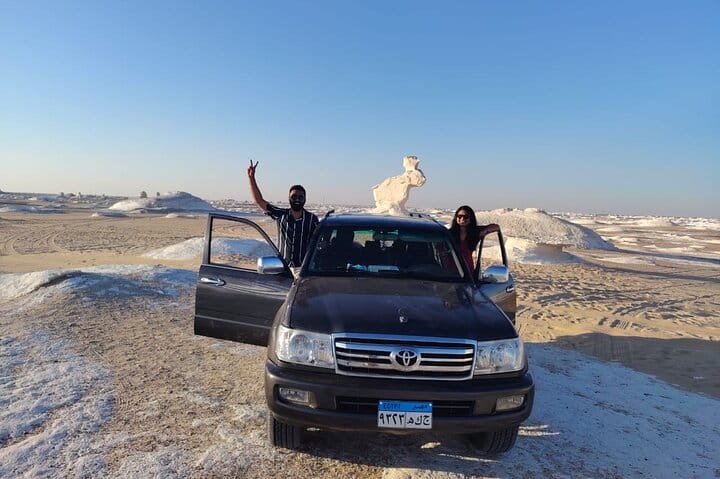
Dynamic Shapes: The White Desert is renowned for its unique, wind-sculpted rock formations that take on the shapes of animals, mushrooms, and abstract figures. Famous formations include the Chicken and Mushroom Rock, the Inquisitor, and other shapes that appear almost artistic in their surreal, towering forms.
Ever-Changing Landscape: The continuous action of wind and sand erosion means the landscape is always subtly changing, offering returning visitors new features to marvel at.
2. Color Contrasts and Natural Beauty:
Brilliant White Chalk: The desert’s name comes from the dazzling, snow-white chalk rock formations that dominate the landscape. These formations reflect sunlight during the day and seem to glow under the moonlight, creating an otherworldly ambiance.
Golden Sands: The contrast between the bright white chalk formations and the golden-orange
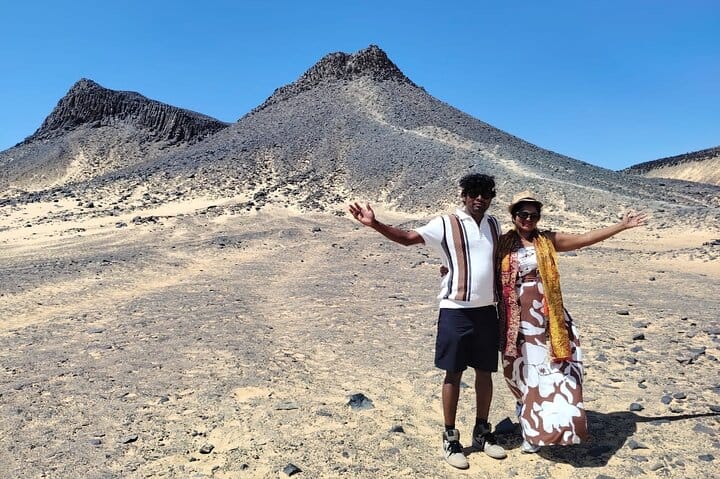
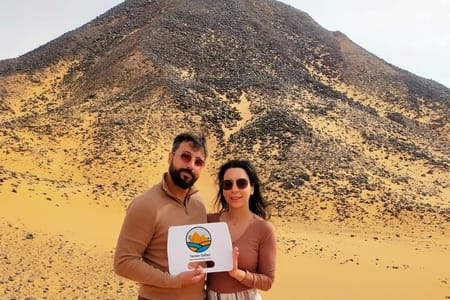
The “Black Desert” is an intriguing natural landmark in Egypt, known for its unique black volcanic hills, stretching over a wide expanse in the Western Desert. It’s located between the Bahariya Oasis and the Farafra Oasis, a region that draws visitors due to its unusual landscape and stark contrast to the surrounding sands. Here are some key features that make the Black Desert a popular tourist
The Black Desert is named for its dark, volcanic rock covering, which blankets sand dunes and flat expanses, creating an otherworldly landscape. The black rocks are remnants of ancient volcanic activity, and they lend a striking appearance, especially when contrasted with the golden and reddish sands of the surrounding desert.
Visitors are particularly captivated by the conical black hills scattered throughout the area. These hills were created by volcanic eruptions millions of years ago, leaving basalt rocks atop sandy hills. Some hills are taller, offering panoramic views over the Black Desert
The mountains were formed millions of years ago due to tectonic activities and volcanic eruptions, which caused magma to rise close to the Earth’s surface. When the magma cooled, it formed quartz crystals in large quantities, embedding them within the rock formations. The erosion and tectonic movements over time exposed these crystals, creating the formations we see today.
The Crystal Mountains are often a popular stop for tourists on desert safaris, especially those traveling between the Bahariya Oasis and the White Desert. Their accessibility along this route makes it easy for tourists to explore the mountains as part of a larger itinerary of the Western Desert’s geological wonders.
Travelers enjoy walking around the mountains to examine the crystals up close, often finding fragments scattered around the area. Some tourists collect small crystal pieces as souvenirs (though taking large pieces or damaging the formations is discouraged to preserve the site). The Crystal Mountains
The Valley of Agabat is known for its towering limestone formations, shaped over millions of years by wind and water erosion. These formations resemble various shapes—some even look like giant mushrooms or towers—which lend a mysterious, almost otherworldly feel to the valley. The chalk-white color of the rocks contrasts with the golden sand, creating a striking visual experience, especially at sunrise and sunset.
Surrounding the limestone formations are vast golden sand dunes, which add to the valley’s allure. The soft sand and shifting dunes create a tranquil and peaceful environment, and visitors often feel a sense of awe as they walk through the sands amidst towering cliffs and white rock formations. The sand is very fine and smooth, adding to the valley’s inviting landscape.
The Valley of Agabat is a popular spot for adventure seekers. Its rugged terrain, steep cliffs, and open sand dunes make it ideal for 4x4 desert safaris, dune bashing, and hiking. The sense of exploration in
Deserts are some of the best places in the world for stargazing, as they typically have low light pollution and clear skies. Visitors can witness breathtaking night skies filled with stars, planets, and even the Milky Way. Deserts like the Atacama in Chile and the Mojave in California are renowned for their clear skies, attracting astronomers and photographers alike.
Many deserts hold significant cultural and historical value. They are home to indigenous communities that have lived there for centuries, often developing unique customs, clothing, and survival techniques suited to desert life. For instance, the Tuareg people of the Sahara or the Bedouins of the Middle East are known for their rich traditions and nomadic lifestyles. Deserts are also dotted with historical sites like ancient petroglyphs, ruins, and trade routes, adding a layer of cultural richness to the visitor experience.
Deserts offer a profound sense of solitude and peace. The vast, quiet spaces, with their minimal huma
camping in white desert