
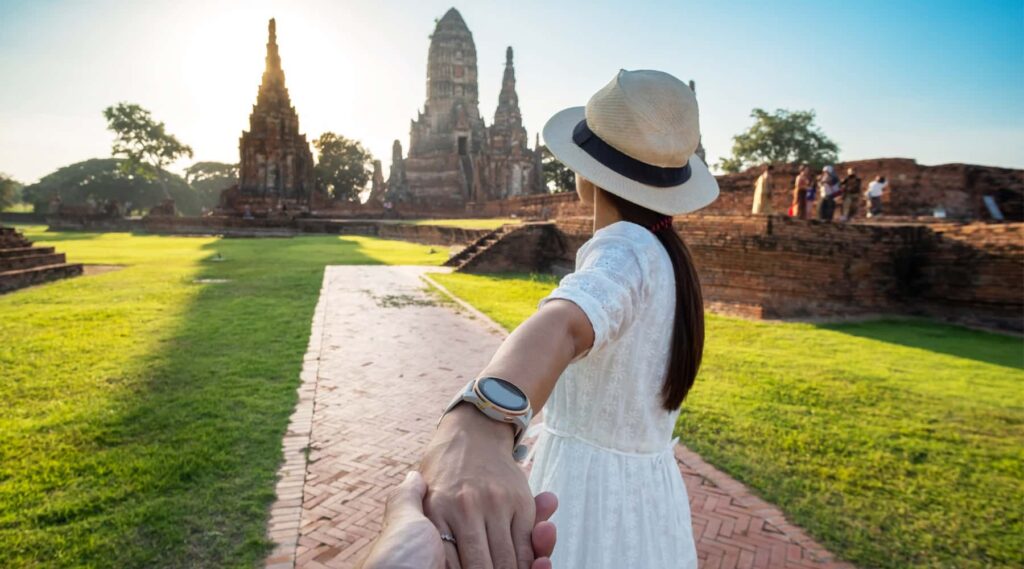
Located just north of Bangkok, the Historic City of Ayutthaya in Thailand is one of the country’s most remarkable historical destinations. Once the thriving capital of the Siamese Kingdom, Ayutthaya is now a breathtaking archaeological site filled with temple ruins, ancient monasteries, and centuries-old Buddha statues.
Founded in 1350, Ayutthaya rapidly grew into one of the most prosperous cities in the world. By the 17th century, it had become an international trading hub connecting merchants from Asia, Europe, and the Middle East. Historical records suggest that more than one million people lived here at its peak, making it one of the largest and most cosmopolitan cities of its time.
Today, the ruins of this once-glorious capital are preserved within Ayutthaya Historical Park, a UNESCO World Heritage Site that attracts travelers from around the globe. Exploring the red-brick temple ruins, massive prang towers, and sacred Buddha statues allows visitors to step back in time and experience the legacy of one of Southeast Asia’s most powerful kingdoms.
Overview of Ayutthaya, Thailand
Ayutthaya is located approximately 76 kilometers north of Bangkok and sits on an island formed by the convergence of three rivers: the Chao Phraya, Lopburi, and Pa Sak rivers. These waterways provided both natural defenses and vital trade routes, allowing the city to flourish as a commercial and political center for more than four centuries.
During its golden age, Ayutthaya welcomed merchants and diplomats from many parts of the world. Portuguese, Dutch, Japanese, Chinese, and Persian traders established settlements within the city, creating a vibrant multicultural environment that influenced the architecture, economy, and culture of the kingdom.
Today, the remains of the ancient capital form Ayutthaya Historical Park, covering nearly 300 hectares and containing dozens of temples, monasteries, and royal structures. Visitors can explore impressive ruins scattered across the island city and its surrounding areas, many of which date back more than 600 years.
The park’s landscape is dotted with towering prangs inspired by Khmer architecture, enormous chedis containing royal relics, and peaceful temple courtyards shaded by centuries-old trees. Exploring these ruins offers travelers a unique glimpse into Thailand’s spiritual traditions and architectural heritage.
History of the Ayutthaya Kingdom
The city of Ayutthaya was founded in 1350 by King Ramathibodi I, also known as King U-Thong. Recognizing the strategic advantages of its river island location, the king established Ayutthaya as the capital of the Siamese kingdom. The surrounding rivers and canals provided natural protection against invasions while also supporting extensive trade networks.
Over the next four centuries, Ayutthaya grew into one of the most powerful kingdoms in Southeast Asia. The city became renowned for its wealth, elaborate temples, and thriving international trade. European travelers in the 17th century described Ayutthaya as one of the grandest cities in the world, filled with magnificent palaces, gilded temples, and bustling markets.
Foreign traders from Portugal, the Netherlands, France, China, and Japan established commercial communities here, transforming the city into a global trading port long before the modern era of globalization. These international influences helped shape the cultural diversity and architectural style that characterized the Ayutthaya kingdom.
However, the kingdom’s prosperity came to a dramatic end in 1767 when Burmese forces invaded and destroyed the city after a long siege. Temples were burned, palaces were looted, and much of the population fled or was displaced. After the fall of Ayutthaya, the Siamese capital was moved south to Thonburi and later to Bangkok.
Despite the destruction, many ruins survived and were later preserved as part of Ayutthaya Historical Park. Today, these remnants serve as powerful reminders of the kingdom’s former grandeur and cultural significance.
Ayutthaya Historical Park
Ayutthaya Historical Park protects the remains of the ancient capital and is one of Thailand’s most important cultural heritage sites. Recognized as a UNESCO World Heritage Site in 1991, the park preserves numerous temples, royal palaces, and archaeological ruins that reflect the city’s historical importance.
The historical park is divided into several zones across the island and surrounding riverbanks. Each area contains significant temples and monuments from different periods of the Ayutthaya kingdom.
| Zone | Main Highlights |
|---|---|
| Central Zone | Royal palace ruins and major historical temples |
| Northern Zone | Large chedis and ancient monastery complexes |
| Western Zone | Riverfront temples and sunset viewpoints |
| Eastern Zone | Active temples and traditional communities |
Exploring the park is relatively easy since most of the major attractions are located within a short distance of one another. Visitors often travel between temples by bicycle, tuk-tuk, scooter, or boat tours along the river.
Famous Temples and Historical Attractions in Ayutthaya
The ancient city of Ayutthaya is best known for its spectacular Buddhist temples. These ruins showcase a blend of Khmer, Sri Lankan, and traditional Thai architectural styles, reflecting centuries of artistic and religious development.
Some temples are partially restored while others remain atmospheric ruins, giving visitors a vivid sense of the city’s historical past. The following sites are among the most important landmarks travelers should not miss when visiting Ayutthaya.
Major Temples and Historical Landmarks in Ayutthaya
The ruins of Ayutthaya include dozens of temples, monasteries, and royal religious sites. These structures were once the spiritual and cultural heart of the Siamese kingdom. Today, their red-brick towers, towering chedis, and peaceful courtyards remain some of the most impressive historical landmarks in Thailand.
Below are some of the most famous temples and attractions you should explore when visiting the historic city of Ayutthaya.
Wat Mahathat
Wat Mahathat is one of the most iconic temples in Ayutthaya and one of the most photographed landmarks in Thailand. Built during the early years of the Ayutthaya Kingdom, the temple once served as the spiritual center of the city and housed important Buddhist relics.
The temple is best known for the famous Buddha head entwined in the roots of a banyan tree. Over the centuries, tree roots slowly grew around the sandstone head, creating one of the most unique and recognizable images in Southeast Asian archaeology.
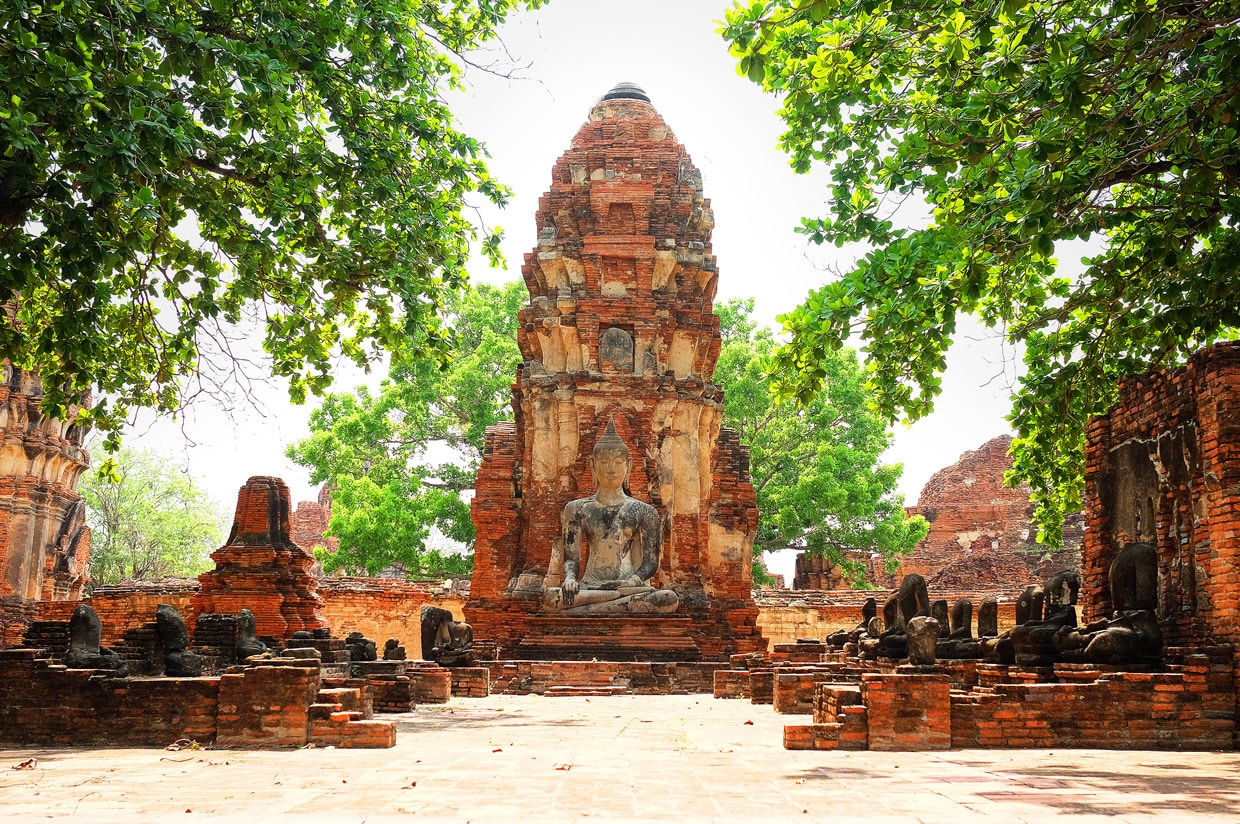
In addition to the famous Buddha head, visitors can explore the ruins of the temple’s main prang tower, meditation halls, and ancient galleries that once surrounded the sacred complex.
Wat Phra Si Sanphet
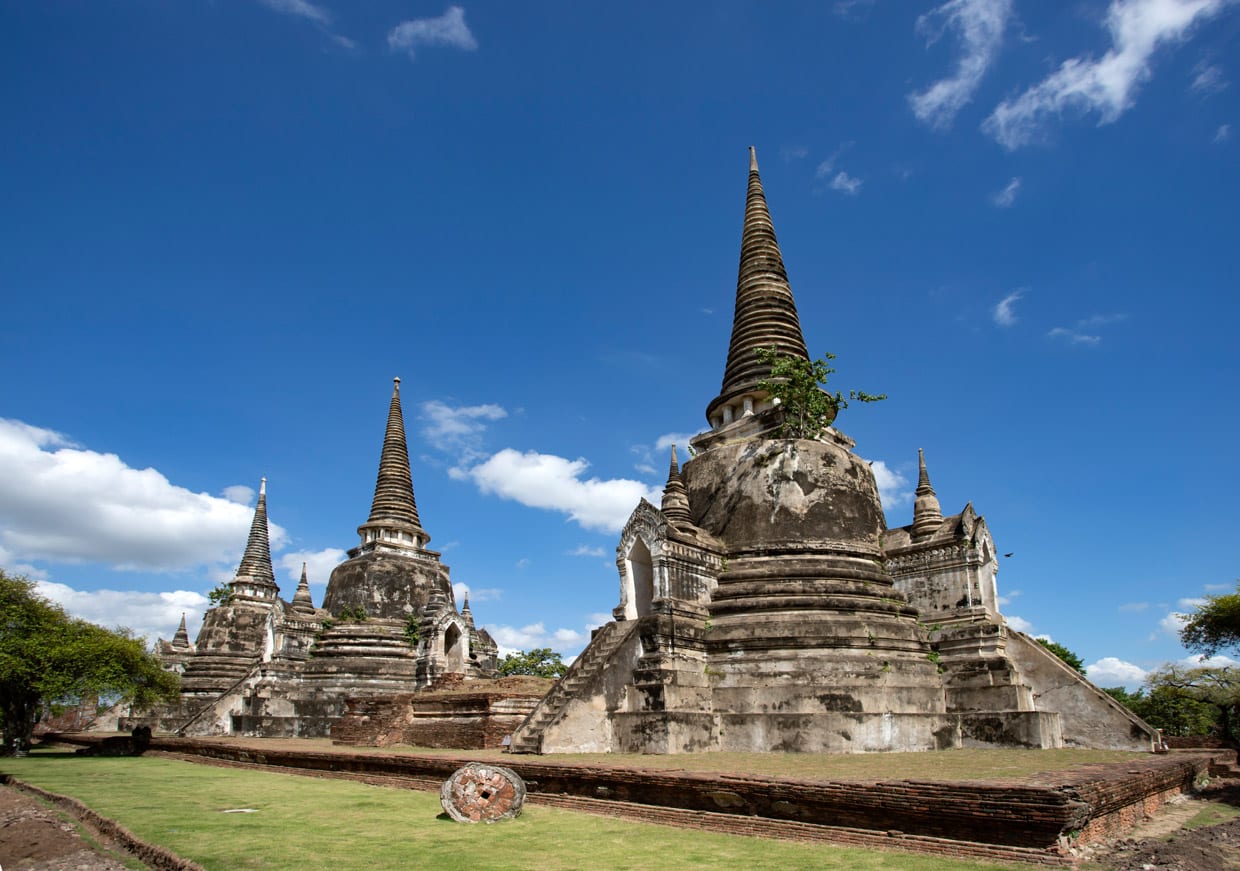
Wat Phra Si Sanphet was the most important royal temple of the Ayutthaya Kingdom and was located within the grounds of the former royal palace. Unlike most temples in Thailand, this monastery had no resident monks and was used exclusively for royal ceremonies.
Today, the temple is famous for its three large bell-shaped chedis arranged in a row. These chedis contain the ashes of three Ayutthaya kings and have become one of the most recognizable symbols of the ancient city.
The temple once housed a massive standing Buddha statue covered with hundreds of kilograms of gold, making it one of the most valuable religious monuments in the kingdom before the city was destroyed in 1767.
Wat Yai Chai Mongkhon
Wat Yai Chai Mongkhon is one of the best-preserved and most active temples in Ayutthaya. Originally built in the 14th century, the temple commemorates a military victory against Burmese forces.
The highlight of this temple is its enormous bell-shaped chedi, which rises high above the surrounding monastery buildings. Visitors can climb part of the structure for panoramic views of the temple grounds and the surrounding city.
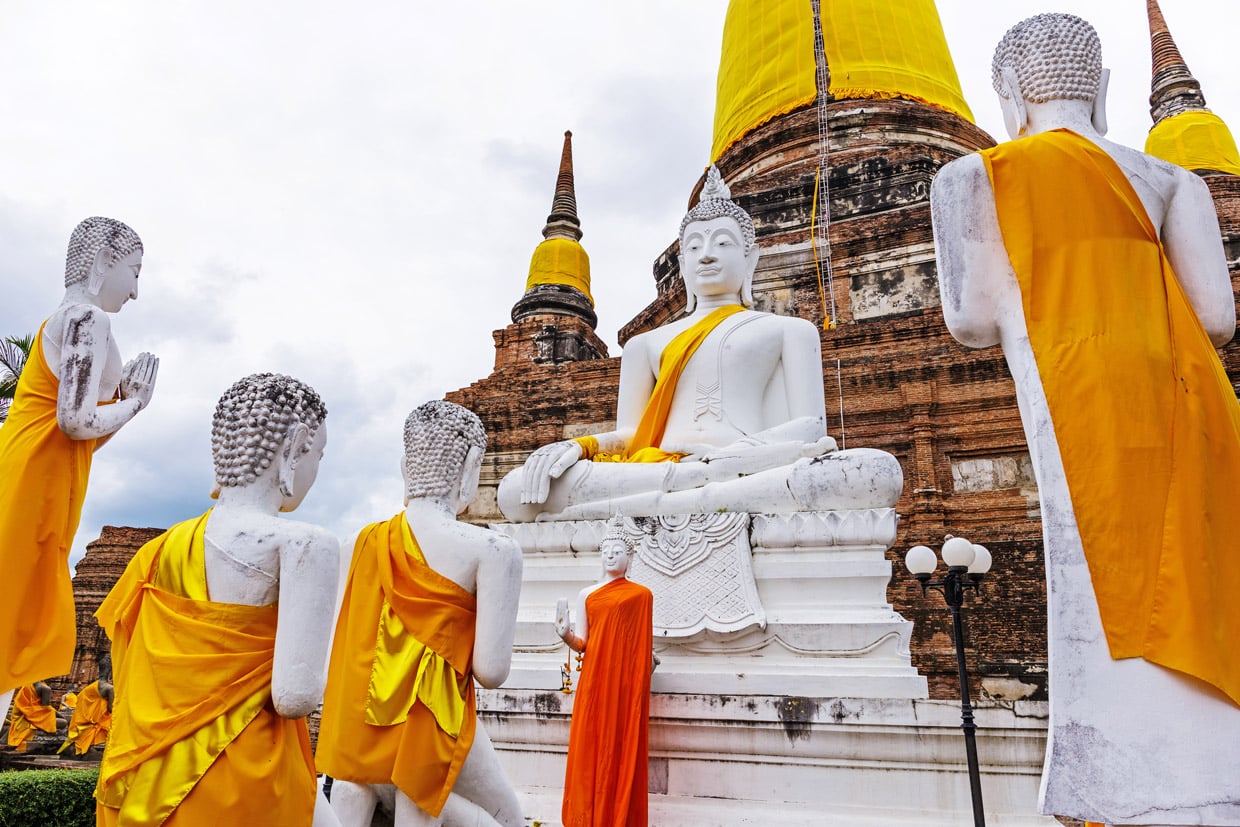
The temple complex also features rows of restored Buddha statues draped in saffron robes, a large reclining Buddha statue, and peaceful gardens where visitors can enjoy a quiet moment of reflection.
Wat Chaiwatthanaram
Wat Chaiwatthanaram is one of the most impressive temple complexes in Ayutthaya and a favorite location for photographers. Built in 1630 during the reign of King Prasat Thong, the temple sits on the western bank of the Chao Phraya River.
The design of the temple symbolizes Mount Meru, the mythical center of the Buddhist universe. A large central prang tower represents the sacred mountain, while surrounding chedis symbolize the continents and cosmic oceans.
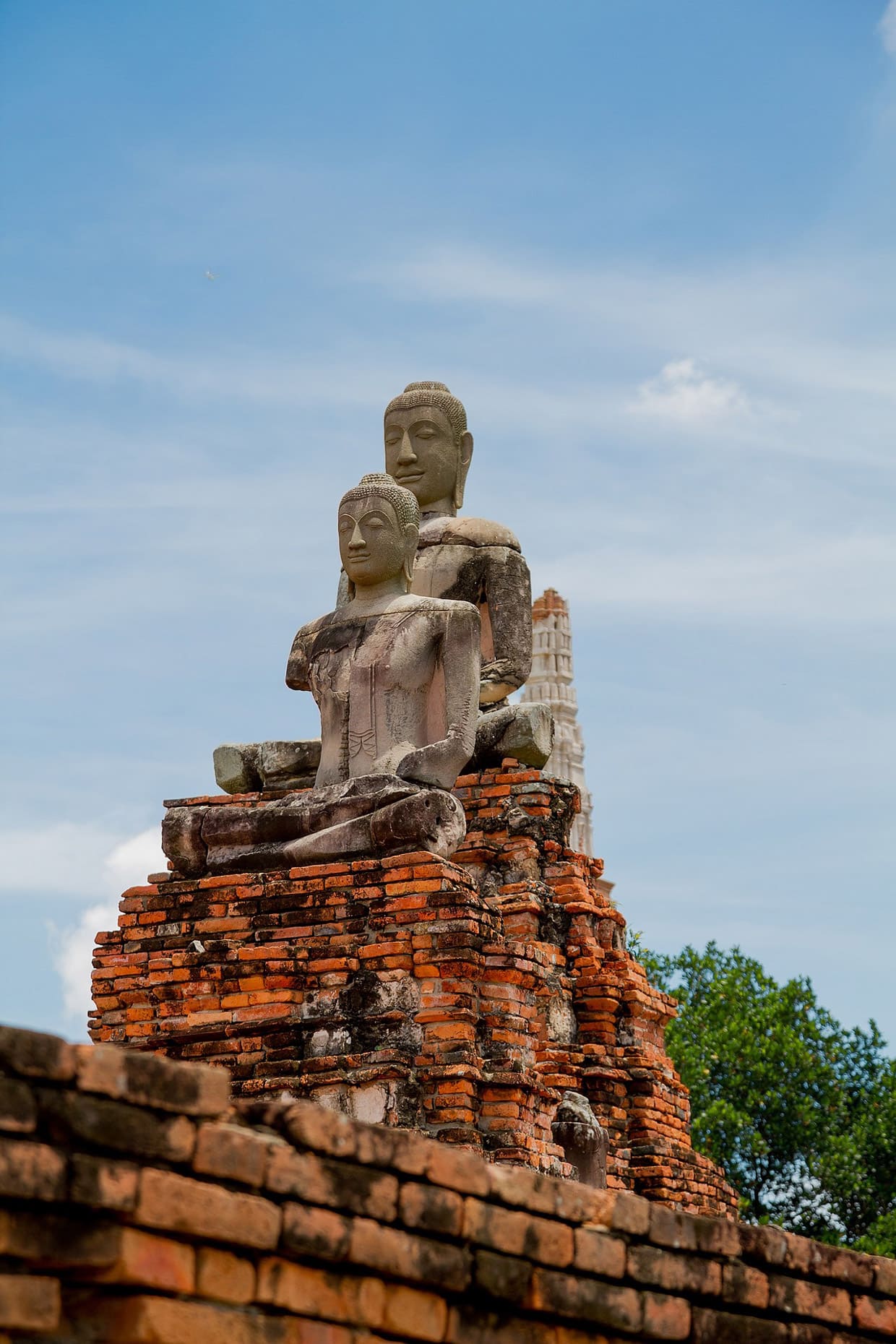
The temple complex is particularly beautiful at sunset when the golden light illuminates the ancient brick structures and reflects off the nearby river.
Wihan Phra Mongkhon Bophit
Located close to Wat Phra Si Sanphet, Wihan Phra Mongkhon Bophit houses one of the largest bronze Buddha statues in Thailand. The statue, known as Phra Mongkhon Bophit, is highly revered by Thai Buddhists.
The statue was originally cast during the Ayutthaya period but was severely damaged during the Burmese invasion in 1767. It was later restored and now sits inside a large viharn where visitors and pilgrims come to pay their respects.
Wat Na Phramen
Wat Na Phramen is one of the few temples in Ayutthaya that survived the destruction of the city. During the Burmese invasion, the temple was reportedly used as a military headquarters, which helped protect it from being destroyed.
Inside the temple, visitors can admire beautiful wooden architecture, intricately carved gables, and a rare Buddha statue dressed in royal attire. The temple reflects the distinctive artistic style of the late Ayutthaya period.
Wat Phanan Choeng
Wat Phanan Choeng is one of the oldest active temples in the region, dating back to 1324, which means it was built before the founding of the Ayutthaya Kingdom itself.
The temple is famous for its massive seated Buddha statue known as Luang Pho Tho. Standing over 19 meters tall, the statue is one of the most revered Buddha images in Thailand and attracts pilgrims from across the country.
Bang Pa-In Summer Palace
Located a short distance south of Ayutthaya, Bang Pa-In Summer Palace served as a royal retreat for Thai kings. The palace complex sits beside a tranquil lake and is surrounded by beautifully landscaped gardens.
The architecture of the palace is unique because it blends traditional Thai design with European neoclassical and Chinese influences. Many of the structures visible today were rebuilt during the 19th century under King Chulalongkorn.
Best Things to Do in Ayutthaya
While Ayutthaya is famous for its ancient temples, there are many other experiences that make visiting the historic city memorable. From cycling through temple ruins to enjoying sunset river cruises, Ayutthaya offers travelers a variety of ways to explore Thailand’s former capital.
Here are some of the best activities to include during your visit.
Explore the Temple Ruins by Bicycle
One of the most popular ways to explore Ayutthaya Historical Park is by bicycle. The temple ruins are spread across a relatively flat island, making cycling both convenient and enjoyable.
Many guesthouses and rental shops near the historical park offer bicycles for a small daily fee. Riding between temples allows visitors to explore hidden ruins, peaceful canals, and local neighborhoods at a relaxed pace.
Take a Boat Tour Around the Island
Because Ayutthaya is surrounded by rivers, boat tours provide a unique way to see the historic city. River cruises travel along the Chao Phraya River and pass several temple complexes that sit directly along the water.
Many boat tours stop at temples such as Wat Chaiwatthanaram and Wat Phanan Choeng while offering scenic views of riverside communities and historic landmarks.
Watch the Sunset at Wat Chaiwatthanaram
Sunset is one of the most magical times to visit Ayutthaya’s temples. Wat Chaiwatthanaram, located along the riverbank, is one of the best spots to watch the sun set behind the ancient prang towers.
As the evening light reflects off the red brick ruins, the temple complex takes on a golden glow that makes it a favorite location for photographers and travelers alike.
Visit Ayutthaya Floating Market
Ayutthaya Floating Market offers visitors a glimpse into traditional Thai market culture. Vendors sell local food, handcrafted souvenirs, clothing, and snacks from wooden boats and small riverside stalls.
Travelers can sample authentic Thai dishes, watch cultural performances, and enjoy a lively atmosphere while exploring the market area.
Suggested One-Day Ayutthaya Itinerary
Many travelers visit Ayutthaya as a day trip from Bangkok. With careful planning, it is possible to explore several major temples and attractions within a single day.
| Time | Activity |
|---|---|
| 08:00 | Travel from Bangkok to Ayutthaya |
| 09:30 | Explore Wat Mahathat and the famous Buddha head in tree roots |
| 11:00 | Visit Wat Phra Si Sanphet and the royal palace ruins |
| 12:30 | Lunch at a local riverside restaurant |
| 14:00 | Visit Wat Yai Chai Mongkhon |
| 16:30 | Explore Wat Chaiwatthanaram |
| 18:00 | Watch sunset near the river temples |
Travelers with more time can stay overnight and explore additional temples, museums, and local markets around the city.
Local Food to Try in Ayutthaya
Ayutthaya is also known for several unique Thai dishes and local street foods. Sampling regional cuisine is an essential part of the travel experience here.
| Dish | Description |
|---|---|
| Boat Noodles (Guay Tiew Reua) | Rich noodle soup traditionally served in small bowls |
| Roti Sai Mai | Colorful cotton-candy-like sugar wrapped in thin pancakes |
| Grilled River Prawns | Fresh prawns grilled and served with spicy seafood sauce |
| Thai Milk Tea | Sweet iced tea commonly served at street stalls |
Best Time to Visit Ayutthaya
Ayutthaya can be visited throughout the year, but the most comfortable time to explore the ruins is during Thailand’s cooler season.
| Season | Conditions |
|---|---|
| November – February | Cool and dry weather, best time for sightseeing |
| March – May | Hot season with high temperatures |
| June – October | Rainy season with occasional heavy showers |
Early morning or late afternoon visits are ideal, as temperatures are cooler and lighting conditions are perfect for photography.
How to Get to Ayutthaya
Ayutthaya is located about 76 kilometers north of Bangkok and can be reached by several transportation options.
| Transport Option | Details |
|---|---|
| Train | Regular trains run from Bangkok’s Hua Lamphong Station to Ayutthaya |
| Bus or Minivan | Departures from Bangkok’s Mo Chit bus terminal |
| Private Tour | Guided day trips available through travel companies |
| River Cruise | Scenic boat trips along the Chao Phraya River |
Many travelers combine a morning train ride to Ayutthaya with a scenic river cruise back to Bangkok, creating a unique travel experience.
Travel Tips for Visiting Ayutthaya
- Dress modestly when visiting temples by covering your shoulders and knees.
- Bring sunscreen, a hat, and plenty of water, especially during the hot season.
- Renting a bicycle or hiring a tuk-tuk is the easiest way to explore the ruins.
- Start early in the morning to avoid crowds and midday heat.
- Respect religious sites and avoid climbing on fragile ruins.
With its remarkable temple ruins, rich history, and easy access from Bangkok, Ayutthaya remains one of Thailand’s most rewarding cultural destinations. Whether visiting for a day trip or staying longer, exploring the historic capital offers a deeper understanding of Thailand’s fascinating past.