Buddhist Pilgrimage Tour in Sagarmatha National Park, Nepal
Free Cancellation · Instant confirmation · Private tour

Arrive Patna or Bodhgaya Airport
On arrival at Patna or Gaya airport assistance and transfer to hotel.
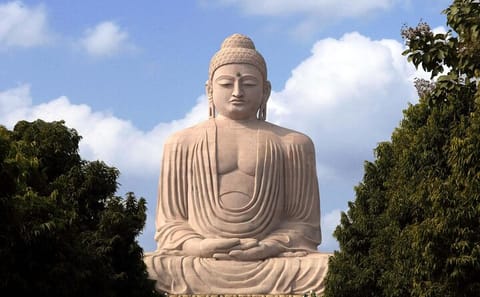
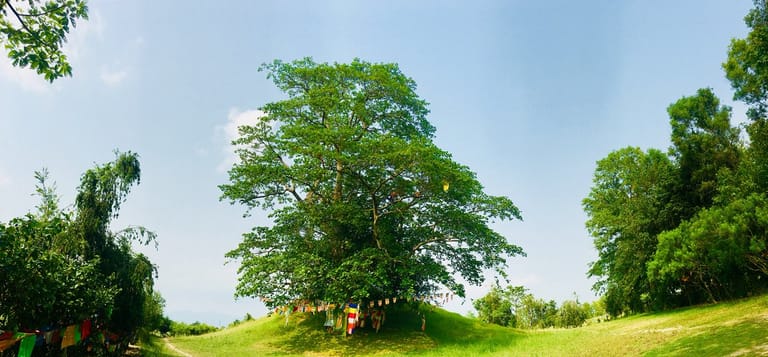
Bodh Gaya, the most important Buddhist pilgrimage site, is where Siddhartha Gautama attained full enlightenment after sitting and meditating under the Bodhi tree (ficus religiosa) for 49 days. The primary points of homage here are the Bodhi tree (the current tree is a descendant of the original tree); the Vajrasana, or “diamond seat,” under the tree; and the Mahabodhi Temple, whose 52-meter spire rises up to the skies. The diamond seat, the oldest monument at Bodhgaya, is believed to have been erected by Ashoka to mark the spot where the Buddha gained ultimate liberation. The Mahabodhi Temple Compound includes a number of other shrines where the Buddha spent seven weeks immediately following his experience of nirvana.
Bodh gaya, now a World Heritage Site and a thriving tourist center, draws devotees from all over the world, who meditate, chant, offer flowers and incense, do prostrations, and engage in their respective rituals with great devotion and concentration. For many, sitting in meditation under the Bodhi tree, where the Buddha himself sat, is a profound spiritual experience.
Overnight at hotel.
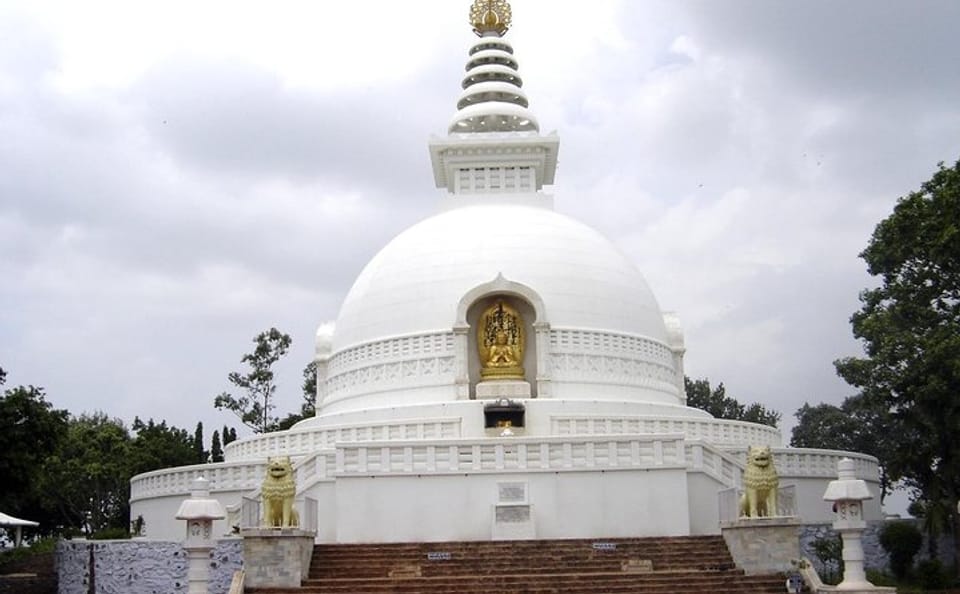
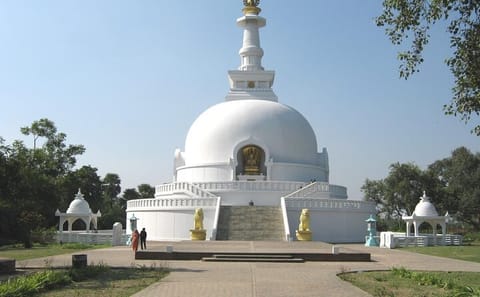
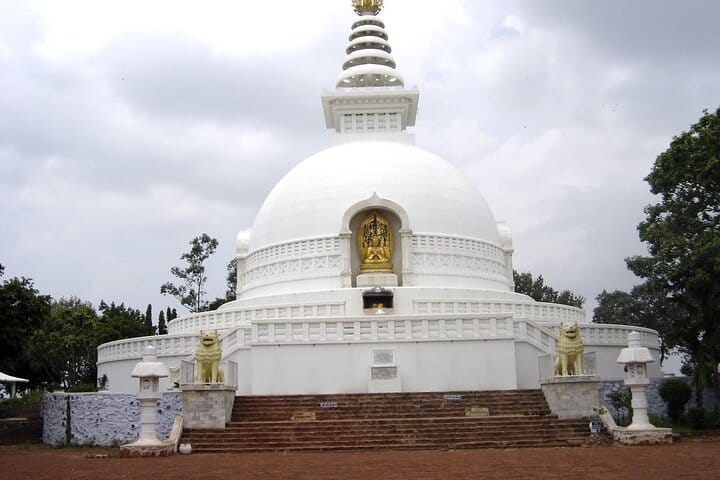
Breakfast at hotel. Morning to visit Mahabodhi Temple. Afternoon drive to Patna via visiting Rajgir 400m high Vishwa Shanti Stupa & Nalanda a hot seat of knowledge and learning established in the 5th century.
Rajgir - was the largest city in Majjhimadesa during the Buddha’s time. Among the many notable places in the area are the tranquil Vulture’s Peak (Gijjhakuta), where the Buddha meditated, and the Sattapanni Cave, where the First Council was organized after the Buddha’s passing.
Nalanda - the Buddha spent time in Nalanda, and his two chief disciples, Sariputta and Moggallana, also came from its vicinity. Later, the acclaimed Buddhist monastic university thrived here until its destruction by invaders at the end of the 12th century. Today there is a new Nava Nalanda university as well as a beautiful memorial honoring the 7th-century Chinese pilgrim Xuanzang (Hsüan-tsang), whose work was indispensable for preserving India’s Buddhist heritage.
After sightseeing continue drive to Patna check in at hotel.
Overnight at hotel.
Breakfast at hotel, drive to Kushinagar en route visit Vaishali a city of great importance in Buddhist history. Among other significant events, the Buddha admitted women into the monastic order at the Kutagarasala Vihara and delivered the famous Jewel Discourse (Ratana Sutta) to purge the city when faced with a devastating drought, famine, and plague.
Initially constructed as a mud stupa, it gained its present structure in the Maurya, Sunga and Kushana period. The stupa dates between 200 AD and 750 AD and may have been associated with the 4th-century ruler, Raja Chakravarti. Kesariya Stupa is 104 feet high. Huien Tsang mentions having seen the grand Stupa in Kia-shi-po-lo (Kesariya) but it was deserted and overgrown. The Kesariya stupa was discovered in 1958 during an excavation.
On arrival check in at hotel. Rest time free and easy to relax and visit the Mahapari-nirvaana Temple.
Overnight at hotel.
Breakfast at hotel morning to visit Mahapari-nirvaana Temple.
The Buddha passed away at the age of 80 in Kushinagar. The important sites in Kushinagar are the Mahapari-nirvaana Temple, home to a superb 1,500-year-old red sandstone statue of the reclining Buddha, and the imposing Mahaparinirvana Stupa, which was built over the spot where the Buddha is said to have passed away under twin sal trees. The Buddha’s last words at Kushinagar were these: “All compounded things are subject to decay: strive with diligence” (Vaya dhamma sankhara; appamadena sampadetha). Pilgrims to Kushinagar walk in silence around the massive reclining statue of the Buddha to pay homage to the truth of anicca (impermanence) and cultivate a deep sense of gratitude for the Buddha and his teaching.
Afternoon drive to Lumbini check in at hotel. Overnight at hotel.
Overnight at hotel.
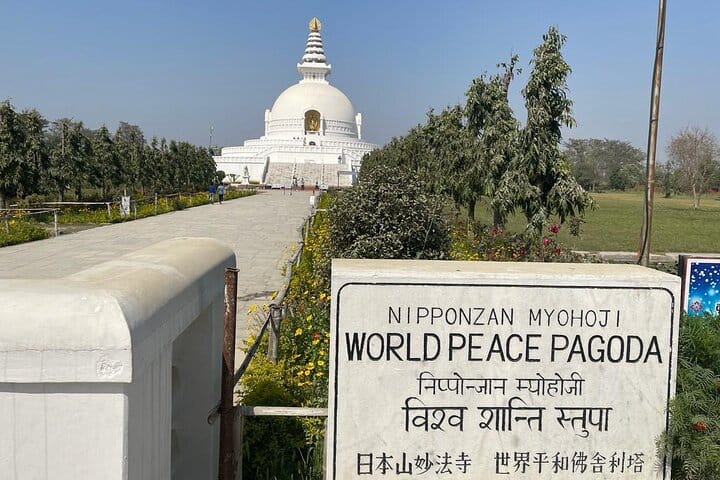
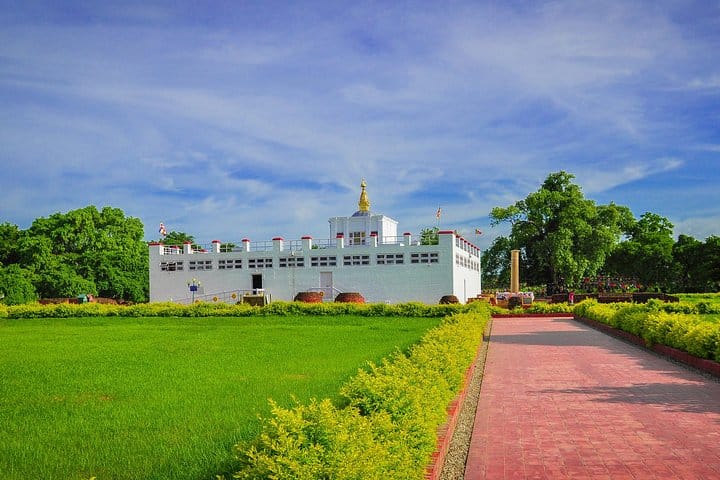
Prince Siddhartha Gautama was born in Lumbini. Maya Devi Temple here is named after Siddhartha’s mother. Above the stone slab is a damaged sculpture of Queen Maya Devi holding the branch of a sala tree after giving birth to Prince Siddhartha, who stands erect on a lotus pedestal. The oldest monument at Lumbini is the Ashoka Pillar, which marks it as the birthplace of the Buddha. A little south of the pillar is the spring-fed rectangular Puskarni pond, where Maya Devi is believed to have bathed before giving birth. The Sacred Garden, developed in recent years, lies beyond the Maya Devi compound and hosts some 40 monasteries from Asian Buddhist nations. At the end of a beautiful canal- and tree-lined avenue is the majestic World Peace Pagoda (Vishwa Shanti Stupa), built by the Nipponzan Myohoji Buddhist Order. Today, the Lumbini Sacred Garden is a UNESCO World Heritage Site and a symbol of world peace.
Kapilavastu - Prince Siddhartha spent the first 29 years of his life here. Today the ancient, 6 BC capital city of the Sakya clan lies in ruin. Though there are few traces of the palace building in which Lord Buddha grew up, there are many relics around that are important to devotees around the world.
Overnight at hotel.
Breakfast at hotel drive to Shravasti check in at hotel. Afternoon sightseeing, overnight at hotel.
Shravasti - The Buddha spent 25 rain retreats at Shravasti (Pali, Savatthi). Three-fourths of the Buddha’s discourses, including the well-known Lovingkindness Discourse (Karaniya Metta Sutta), were given at Jetavana Vihara here, donated by the Buddha’s great lay disciple Anathapindika.
The ruins at Saheth and Maheth are believed to be the site of ancient Shravasti. Maheth was the city-proper while the Jetavana monastery was at Saheth. Of the ancient Shravasti, the city walls are still standing. Within these, the remains of 3 ancient buildings can be visited: Angulimala's stupa, Anathapindika's stupa, and an old temple dedicated to a Jain Tirthankara. Outside of Shravasti is located the stupa where the Twin Miracle (Pali:Yamaka-pātihāriya) took place. The site of Jetavana monastery is the main pilgrim destination, with meditation and chanting mainly done at the Gandhakuti (Buddha's hut) and the Anandabodhi tree. Buddhist monasteries from the following countries have been constructed at Shravasti: Thailand, South Korea, Sri Lanka, Myanmar, Tibet, and China.
Overnight at hotel.
Breakfast at hotel, drive to Varanasi check in at hotel.
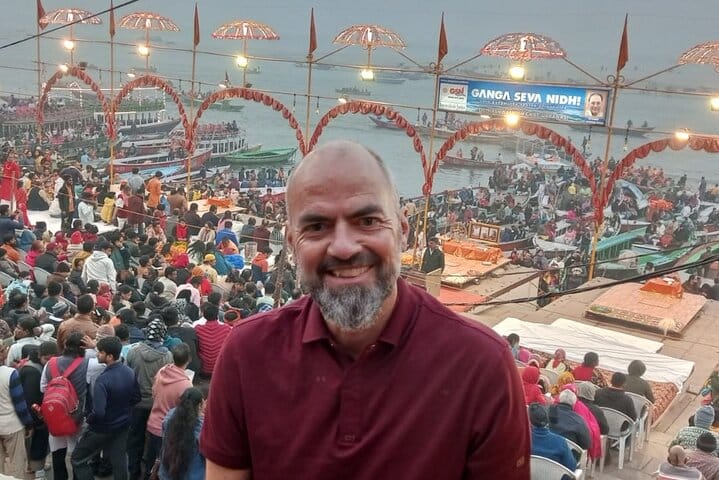
Evening walking tour of Ghats’s temples & mosque on ghats. Also attend Holy Ganga Aarti, a magical aarti performed at Dasashwamedh Ghat at sunset. Halt your boat right at the steps for the best view.
Overnight at hotel.
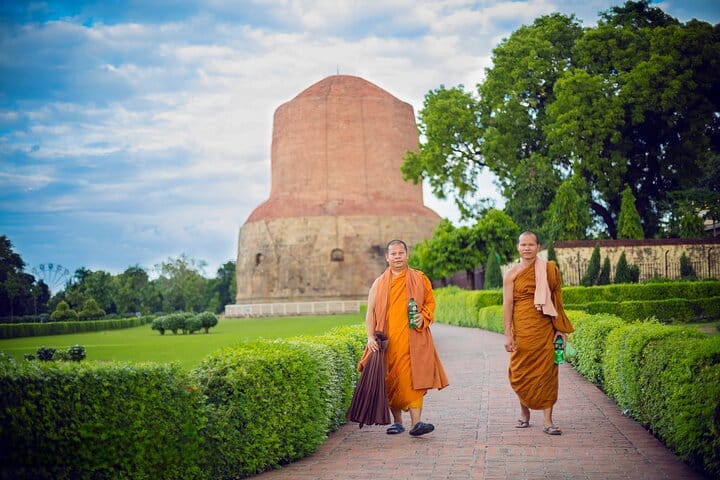
Sarnath - here the Buddha delivered his first discourse, the Dhammacakka Pavattana Sutta (Setting the Wheel of Dhamma in Motion), which explains the four noble truths and the noble eightfold path. It was also in Sarnath that the Buddha appointed his first group of disciples (sangha) to propagate his new teaching. Among the most notable monuments at Sarnath are the Dhamek Stupa, originally built by Ashoka, and the Ashoka Pillar, whose inscription points out the necessity of unity within the sangha. The ruins of various stupas and monasteries at Sarnath bear witness to of the monastic tradition that flourished here for over 1,500 years; among the new temples is the Mulaghandhakuti Vihara, built in 1922 by Anagarika Dharmapala. Today, hundreds of pilgrims visit the Vihara every evening to chant the Dhammacakka Pavattana Sutta, acknowledging with their voices the wisdom and compassion that began to emanate from Sarnath with the Buddha’s first sermon.
City tour of Varanasi visit World famous Benaras Hindu University, The Ramnagar Fort Palace & Many Temples. Overnight at hotel.
Overnight at hotel.
Early morning boat ride and Ghat visit along the Ganges and catch the scene of devotees bathing and praying in the sacred water.
Breakfast at hotel. As per flight schedule transfer to airport to board flight for onward destination.
Fully refundable until 2 days before start
Non-refundable after 2 days before start
Free Cancellation · Instant confirmation · Private tour
Free Cancellation · Instant confirmation · Pickup available
 Elite
Elite
Free Cancellation · Instant confirmation · Private tour
 Elite
Elite
Free Cancellation · Instant confirmation · Private tour
Free Cancellation · Instant confirmation · Private tour
Free Cancellation · Instant confirmation · Private tour
Free Cancellation · Instant confirmation · Private tour
Free Cancellation · Instant confirmation · Private tour
Our assistant finds tours and checks live dates and prices, and answers your questions.