Private Temples Guided Tour (Angkor Wat, Ta Prom & Angkor Thom)
Free Cancellation · Instant confirmation · Private tour

The south gate of Angkor Thom is most popular with visitors, as it has been fully restored and many of the heads remain in place. The gate is on the main road into Angkor Thom from Angkor Wat.
Angkor Thom is undeniably an expression of the highest genius. It is, in three dimensions and on a scale worthy of an entire nation, the materialization of Buddhist cosmology, representing ideas that only great painters would dare to portray
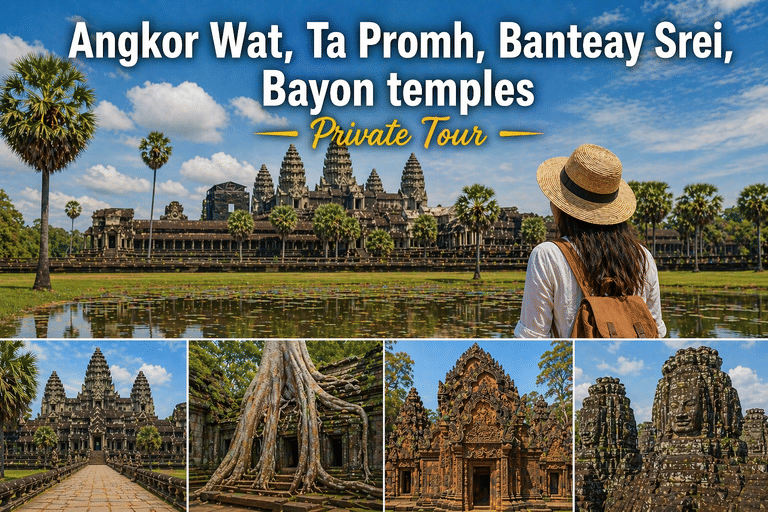
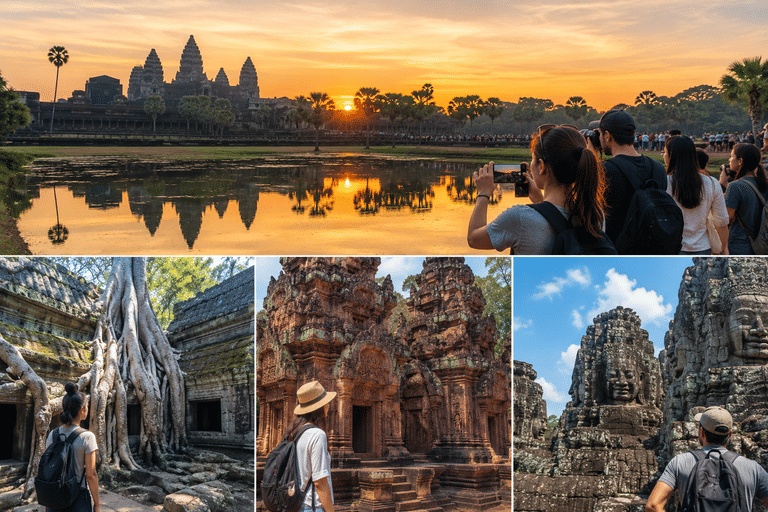
The Bayon temple was built nearly 100 years after Angkor Wat. The basic structure and earliest part of the temple ate not known. Since it was located at the Centre of a royal city it seems possible that the Bayon would have originally been a temple-mountain conforming to the symbolism of a microcosm of Mount Meru. The middle part of the temple was extended during the second phase of building. The Bayon of today belong to the third and last phase of the art style. The Smiling Face at Bayon, the architectural scale and composition of the Bayon exude grandness in every aspects. Its elements juxtapose each other to create balance and harmony and there are more then 200 large faces carved on the 54 tower give this temple its majestic character.
Baphoun is the temple stands on a rectangular sandstone base with five levels that are approximately the same size, rather than the more common form of successively smaller levels. The first, second and third levels are surrounded by sandstone galleries. Baphuon is the first structure in which stone galleries with a central tower appear. Two libraries in the shape of a cross with four porches stand in the courtyard. They were originally connected by an elevated walkway supported by columns
Phimeanakas temple is situated near the center of the area enclosed by the walls of the Royal Palace. It must originally have been crowned with a golden pinnacle, as Zhou Daguan described it as the Tower of Gold The temple is built of roughly hewn sandstone blocks and has little decoration
The elephants are ridden by servants and princes, and tread as quietly as if they were on an excursive promenade. The steps of even length have no respect for any obstacle. The forest in which they travel in impenetrable to all but tiny creatures, able to squeeze their smallness between the fissures of the undergrowth and to the biggest animals, which crush chasms for their passage in the virgin vegetation
The terrace of the Leper King carries on the theme of grandeur that characterises the building during Jayavarman VII's reign. It is faced with dramatic bas-reliefs, both on the interior and exterior. During clearing, the EFEO found a second wall with bas-relief similar in composition to those of the outer wall and some archaeologists believe that this second wall is evidence of a late rites, two meters wide of laterite faced with sandstone. It collapsed and a second wall of the materials, two meters wide, was built right in front of it without any of the rubble being cleared. Recently, the EFEO has created a false corridor which allows visitor to inspect the relief on the first wall
Ta Nei is a late 12th century stone temple in Angkor, Cambodia. Built during the reign of King Jayavarman VII, it is near the northwest corner of the East Baray, a large holy reservoir. It was dedicated to the Buddha.
Ta Prohm is the undisputed capital of the kingdom of the Trees. It has been left untouched by archaeologists except for the clearing of a path for visitors and structural strengthening to stave of further deterioration. Because of its natural state, it is possible to experience at this temple the wonder of the early explorers when they came upon these monuments in the middle of the nineteenth century. Shrouded in dense jungle the temple of Ta Prohm is ethereal in aspect and conjures up a romantic aura. Fig, banyan and kapok trees spread their gigantic roots over stones, probing walls and terraces apart, as their branches and leaves intertwine to form a roof over the structures. Trunks of trees twist amongst stone pillars. The strange, haunted charm of the place entwines itself about you as you go, as inescapably as the roots have wound themselves about the walls and towers.
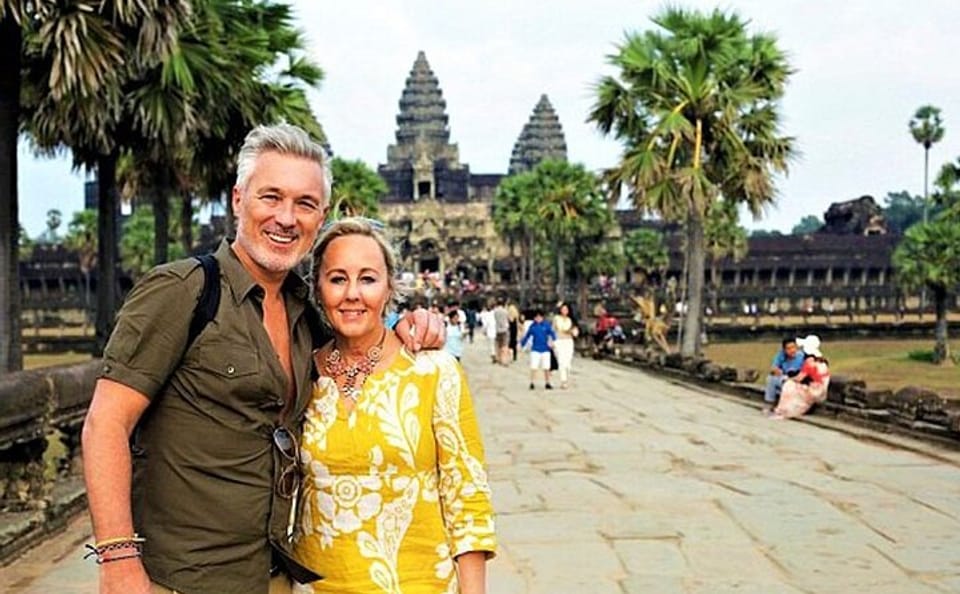
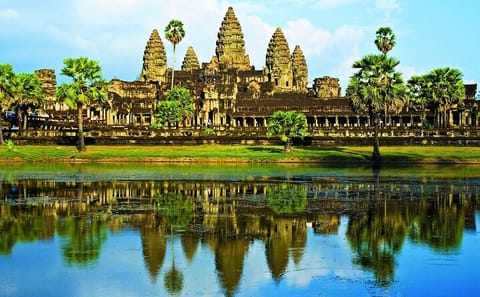
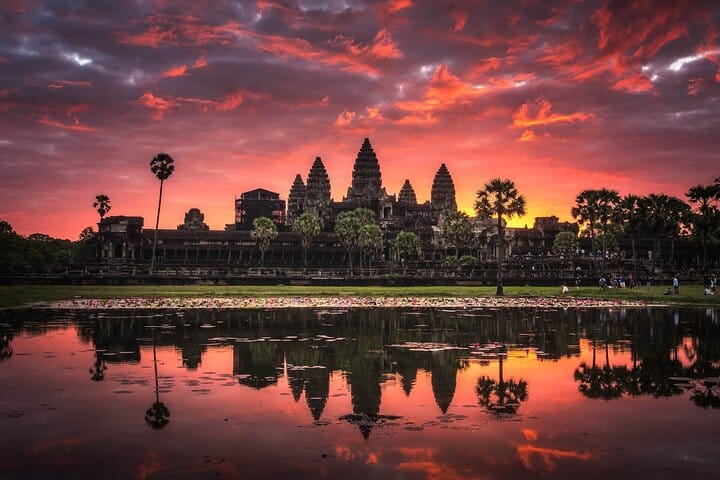
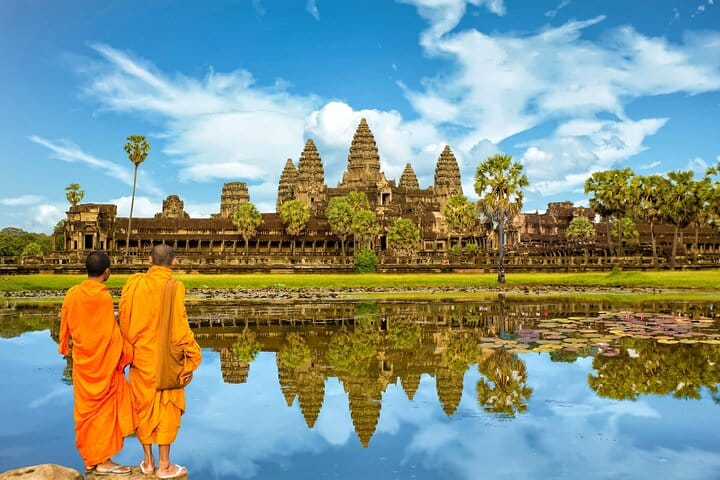
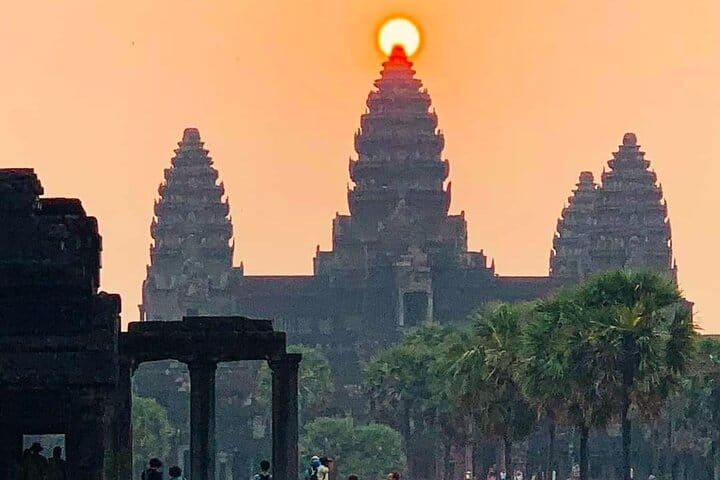
Angkor Wat, the largest monument of the Angkor group and the best preserved, is an architectural masterpiece. Its perfection in composition, balance, proportions, relief's and sculpture make it one of the finest monuments in the world. It is generally accepted that Angkor Wat was a funerary temple for King Suryavarman II and oriented to the west to conform to the symbolism between the setting sun and death. The bas-reliefs, designed for viewing from left to right in the order of Hindu funereal ritual, support this function
Phnom Bakheng is the highest temple in the Angkor Archeological Park, offering the best panoramic views of the whole area. Phnom Bakheng is a temple mountain in honor of the Hindu god Shiva and one of the oldest temples in the Angkor Archaeological Park
Fully refundable until 3 days before start
Non-refundable after 3 days before start
Free Cancellation · Instant confirmation · Private tour
Free Cancellation · Instant confirmation · Private tour
Free Cancellation · Instant confirmation · Private tour
Free Cancellation · Instant confirmation · Pickup available
 Elite
Elite
Free Cancellation · Instant confirmation · Private tour
 Elite
Elite
Free Cancellation · Instant confirmation · Private tour
 Elite
Elite
Free Cancellation · Instant confirmation · Private tour
 Elite
Elite
Free Cancellation · Instant confirmation · Private tour
Our assistant finds tours and checks live dates and prices, and answers your questions.