
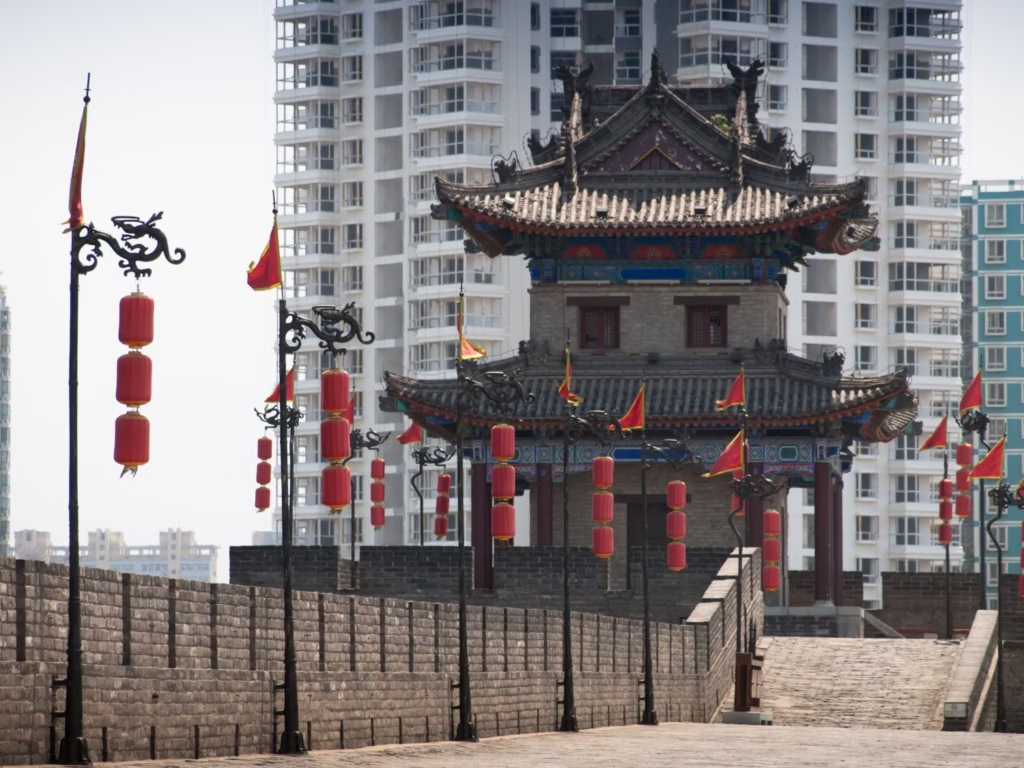
China is more than a country; it’s a living narrative where millennia-old traditions intertwine with ultramodern ambition. For travelers, the contrast between ancient heritage and futuristic skylines isn’t a distraction; it’s the main act.
From weathered pagodas and winding alleyways to gleaming glass towers and bustling megacities, China offers a rare chance to walk between epochs. This post delves into that duality: how the ancient legacy still resonates in daily life, how modern China is being shaped, and why experiencing both is essential to truly understanding the Middle Kingdom.
Ancient Roots: Where China’s Soul Lives On
China’s history stretches over 3,000 years, shaped by dynastic eras that influenced governance, philosophy, and architecture.
Living Palaces and Time-Worn Streets
- Imperial grandeur still thrives. The Forbidden City in Beijing remains one of the world’s most magnificent wooden-structure complexes.
- Ancient towns and traditional dwellings, like those in Lijiang, showcase architectural beauty blended with cultural diversity.
- Living heritage is everywhere. Many historic neighborhoods, from courtyard homes to stilted Zhuang houses, are still lived in today.
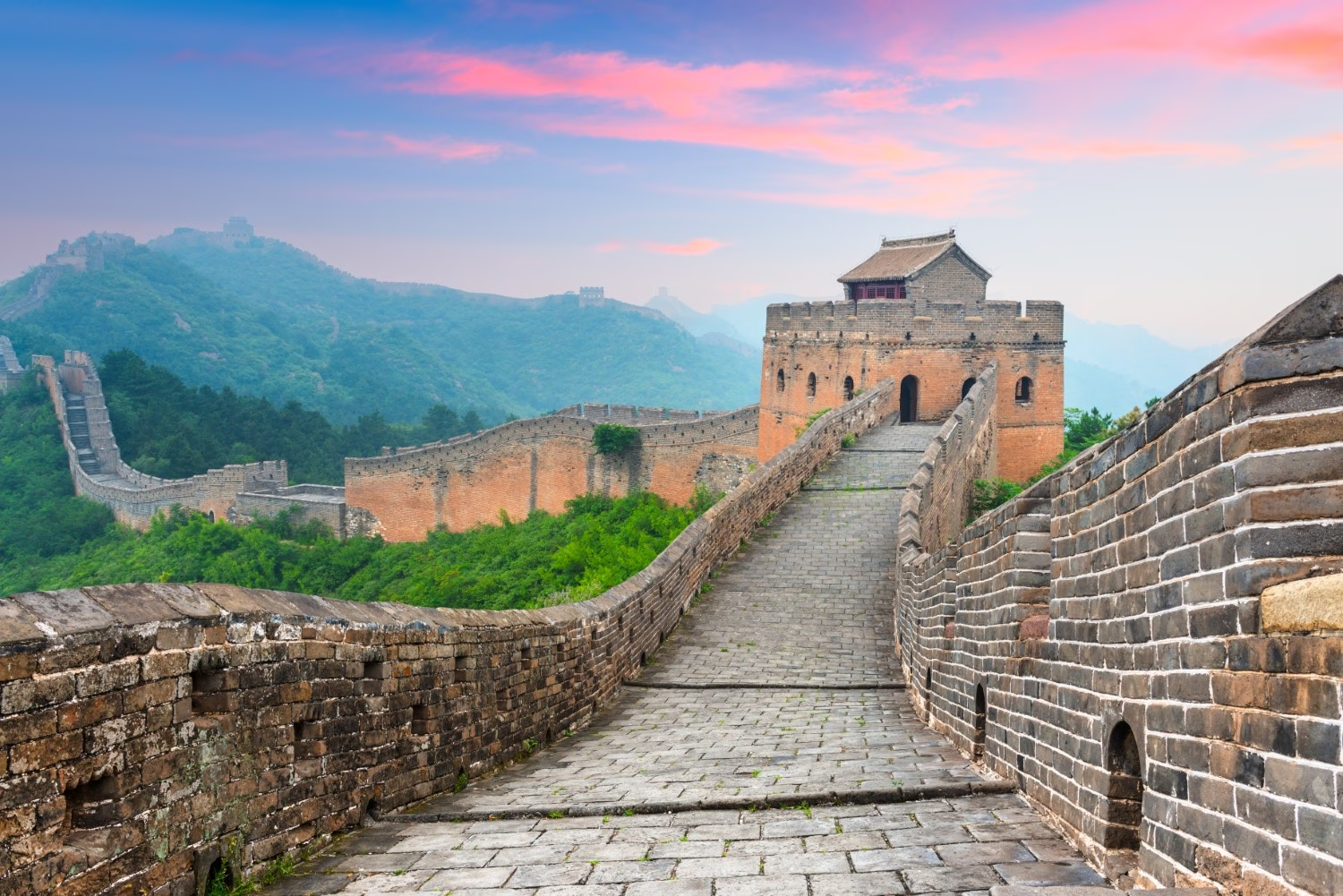
One of the most awe-inspiring ancient achievements is the Great Wall of China; a testament to China’s enduring architectural legacy and a must-see for history lovers.
Modern China: A Canvas of Speed, Innovation, and Ambition
For many, China’s modern cities are the symbols of its transformation — fast-paced, tech-forward, and globally ambitious.
From Cashless Streets to Smart Cities
- China has undergone one of the fastest urban transformations in history, with the majority of its population now living in cities.
- Digital payments, app-based services, and AI-driven infrastructure are a part of everyday life.
- Even 20th-century modernist buildings are now seen as part of the nation’s evolving architectural heritage.
Cities as Symbols: Ambition in Steel and Light
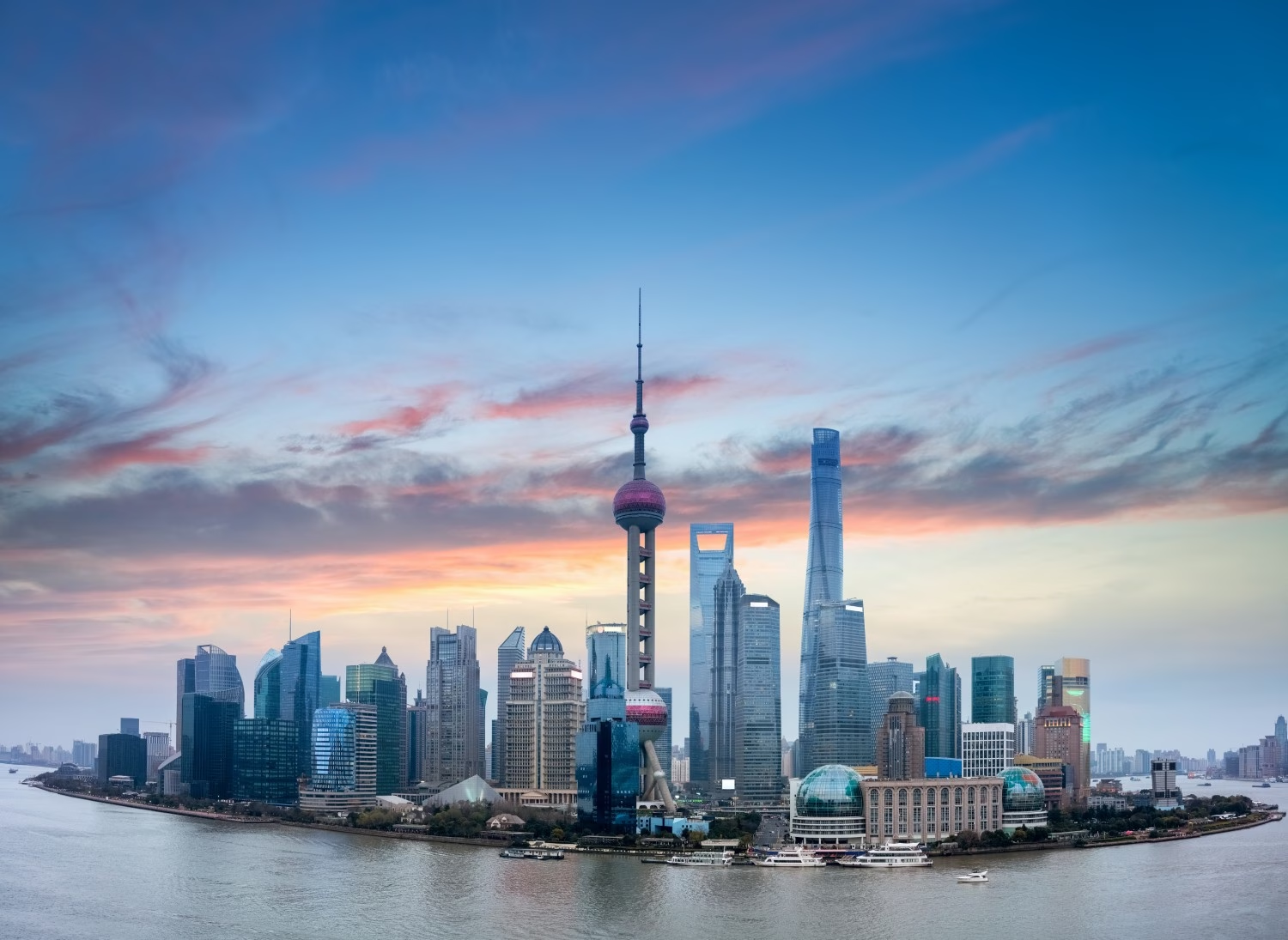
Nowhere is this more vivid than in Shanghai. The Shanghai Skyline stands as a visual metaphor for China’s rise, blending global ambition with futuristic aesthetics.
Beyond megacities, you’ll find ambitious revitalization projects, smart transport hubs, and fusion districts where the old has been reimagined for the future.
Cultural Preservation Amid Modern Pressures
As urbanization continues, the tension between preservation and progress grows.
- Historic districts face gentrification, but also government and community-led efforts to preserve cultural value.
- Traditional villages are increasingly being protected as living heritage sites.
- China’s approach often involves adaptive reuse, turning old temples, homes, and markets into modern spaces without losing authenticity.
China proves that its ancient legacy isn’t frozen in the past; it evolves with purpose.
Where Old Meets New: The Dynamic Tension That Defines China
In China, ancient and modern often sit side by side, literally.
Architectural and Cultural Interweaving
- In cities like Shanghai, Shikumen lane houses sit next to glass towers, offering a unique mix of 19th-century charm and 21st-century energy.
- Historic towns and rural villages remain key sites for innovation in sustainable tourism and cultural preservation.
- China’s preservation efforts now extend to modern heritage — embracing its own recent past with pride.
Tourism: A Bridge or a Challenge?
Heritage tourism is booming, drawing both domestic and international travelers. However, this also brings:
- Over-commercialization in popular old towns
- Rising local costs and displacement
- A risk of replacing authenticity with performance
Still, when managed with care, tourism plays a vital role in protecting and reviving cultural landscapes.
For the Traveler: How to Experience China’s Duality
Want to experience both Chinas in one trip? Here’s how to do it.
What to See and Do: Old vs. New
| Experience | Why It Matters |
|---|---|
| See how tradition is embedded in futuristic design | Insight into centuries-old architecture and traditional life |
| Visit imperial palaces and heritage museums | Learn about China’s dynastic history and artistic traditions |
| Explore megacities like Beijing and Shanghai | Experience the innovation and urban speed of modern China |
| Discover fusion zones and repurposed districts | See how tradition is embedded into futuristic design |
Sample Itinerary
- Start in a historical town like Pingyao or Lijiang for a deep dive into China’s cultural roots.
- Head to a major city like Shanghai or Shenzhen to feel the thrill of China’s tech-savvy pulse.
- Finish with a hybrid destination, such as Hangzhou or Xi’an, where tradition and modernity coexist in harmony.

Travel Mindset: Curious, Respectful, Open
To make the most of your trip:
- Appreciate heritage beyond the visuals — seek context and stories.
- Respect local customs and practices, even in urban spaces.
- Support responsible tourism that benefits communities.
What This Duality Says About China
China’s duality reflects a civilization that honors its roots while charging into the future.
- The past is not abandoned — it is integrated into modern identity.
- The country embraces innovation while remaining connected to tradition.
- For travelers, this contrast creates one of the most dynamic and meaningful journeys possible.
Traveling in China is like time travel — only faster.
Must-See Highlights
- Hike the Great Wall of China for a breathtaking experience of imperial engineering and panoramic history.
- Marvel at the Shanghai Skyline, a futuristic cityscape that showcases China’s ambition and vision.
- The Combo: Lisboeta Macau: a bold, cinematic complex that embodies China’s playful modern edge blended with Portuguese colonial charm.
Conclusion: China’s Timeless Dance Between Past and Future
China is not torn between eras. It moves confidently with one foot in tradition and the other in the future. From serene temple courtyards to bullet train journeys, from ancient alleyways to light-speed urban life, China gives you a world of contrasts in one destination.
You don’t have to choose between cultural depth and modern marvels; in China, you get both, often within a single breath.